
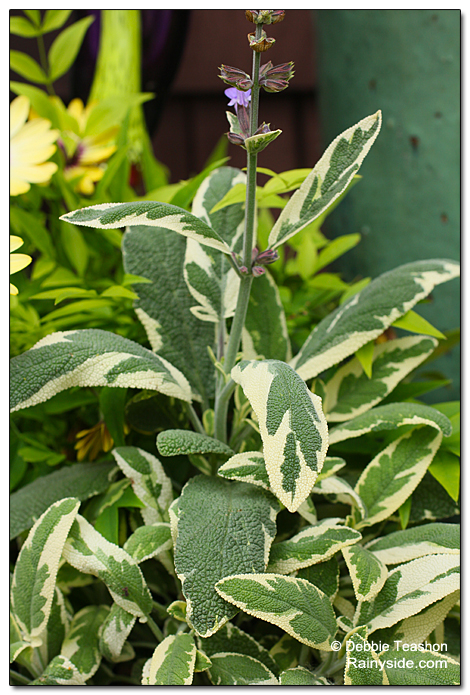
Salvia officinalis 'White Edged'
VARIEGATED CULINARY SAGE
syn. n/a
Family: Lamiaceae
Pronounced: SAL-vee-uhh oh-fi-shi-NAH-lis
Quick Jumps
Growing Guide
Rainy Side Notes
GROWING GUIDE
Origin:
Garden.
Plant group:
Perennial herb.
Hardiness:
Sunset zones: 2-24, H1, H2.
USDA zones: 7-9.
Heat zones: 8-1.
Mature size:
Height: 24 inches (60 cm).
Width: 30 inches (76 cm).
Flowering period:
Early to midsummer.
Flowering attributes:
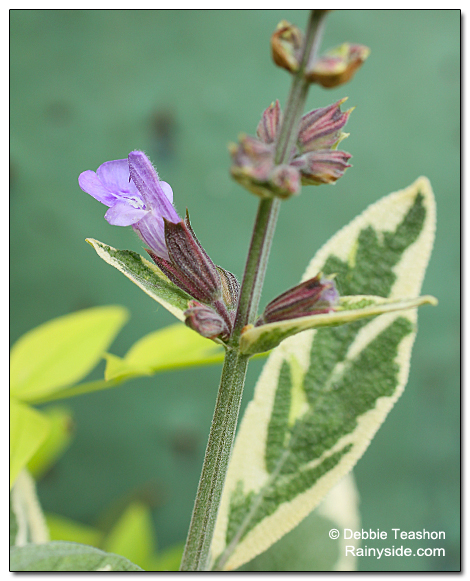
Racemes of lilac-blue, one-half inch long flowers.
Leaf attributes:
Three-inch long, oblong-ovate, hairy, evergreen, variegated gray-green leaves with white margins.
Growth habit:
Subshrub.
Light:
Full sun to light dappled shade.
Soil:
Moderately fertile, humus rich, well-drained soil.
Feeding:
Side dress with compost. Fertilize in April with a complete organic fertilizer.
Propagation methods:
Softwood cuttings in spring and early summer.
Root semi-ripe cuttings from late summer to autumn using bottom heat.
Pruning methods:
In mid to late spring, prune lightly to shape wayward stems. Do not trim below growing leaves as the stems will not grow back. Prune out stems where leaves are reverting to solid gray-green.
Rainy Side Notes
Salvia 'White Edged' is a beautiful, variegated sage selection. Plant this sage in garden beds or containers for both its culinary uses and its eye-catching foliage. Enjoy a bonus of lavender-blue flowers in late spring.
As with all Salvia officinalis species, these herbs are perfectly hardy west of the Cascade Mountains, withstanding temperatures down to 0°F (17°C). However, well-drained soil is necessary.
Salvias live fast and fade early, so take cuttings every few years to keep your garden thriving with fresh plants. Once settled in, they ask for little attention.
Showcase these ornamental sages at the front of your borders, where their color and texture will enliven the garden. They also shine as standout container plants.
If your garden attracts hungry visitors, sage stands its ground as a reliable, deer-resistant option.
Debbie Teashon
Photographed in author's garden.
Gardening for the Homebrewer: Grow and Process Plants for Making Beer, Wine, Gruit, Cider, Perry, and More

By co-authors Debbie Teashon (Rainy Side Gardeners) and Wendy Tweton
Copyright Notice | Home | Search | Herbs