

Amaranthus caudatus
LOVE-LIES-BLEEDING, TASSEL FLOWER, PENDANT AMARANTH, VELVET FLOWER, FOXTAIL AMARANTH[
Synonyms: A. edulis, A. leucocarpus, A mantegazzianus
Family: Amaranthaceae
Pronounced: am-ah-RAN-thus kaw-DAW-tus
Quick Jumps
Growing Guide
Rainy Side Notes
GROWING GUIDE
Origin:
India, Peru.
Plant Group:
Annual.
Hardiness:
Sunset zones: 1-24, H1, H2.
USDA zones: All (when grown as an annual); 10-11 (when grown as a short-lived perennial).
Heat zones: 12-1.
Mature size:
Height: 3-5 feet (1-1.5 m), taller in shade at the expense of flower production.
Width: 18-30 inches (45-75 cm).
Flowering period:
Summer to early autumn.
Flowering attributes:
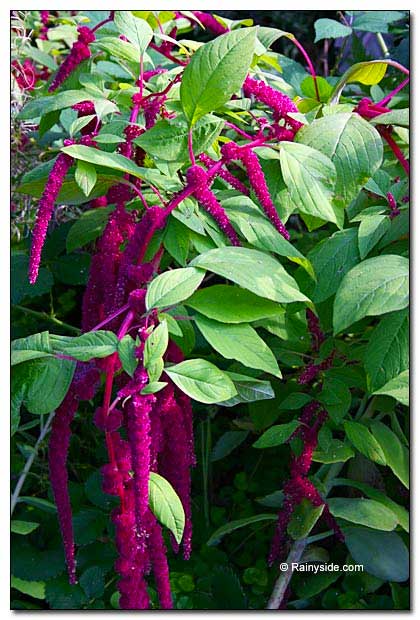
Blood-red flowers cover drooping spikes up to 1 foot long, growing out from the leaf axils.
Leaf attributes:
Ovate, light green leaves.
Light:
Full sun to partial shade.
Soil:
Average, infertile, moist soil.
Propagation Methods:
Maritime Pacific Northwest soil warms up slowly in spring. These seeds germinate best at temperatures above 70°F (21°C). To get an early start, sow seed indoors, cover seed lightly, as it needs light to germinate, and place in a plastic bag with temperatures between 70-85°F (21-29°C). Germination occurs within 6-15 days.
Sow seed directly in the garden after soil warms up to at least 55°F (12°C). When the ground is warm, germination is rapid.
Pests and Diseases:
Problems with root rot, fungal leaf spot, or aphids may occur.
Rainy Side Notes
Sometimes I wonder if this plant’s evocative common name "Love Lies Bleeding" sparked Bernie Taupin's imagination when he penned the lyrics for "Funeral for a Friend/Love Lies Bleeding." For those of us who grew up in the 70s, hearing that name is like stepping into a time machine, back to nights when Elton John dazzled us in wild costumes and enormous glasses, pouring Taupin's longing into every note at the piano. Perhaps the flamboyant Amaranthus flowers and common name were predestined to become an Elton John/Bernie Taupin song.
The name Amaranthus comes from the Greek word amarantos, which means unfading and describes its long-lasting flowers. The species name caudatus means with a tail, pointing to its long flower clusters.
Putting the name aside, this plant is beautiful and delicious. If you want to eat it, plant it in poor soil. Rich, nitrogen-heavy soil makes the leaves store nitrates, which can be harmful. Thankfully, Amaranthus grows well in sandy, less fertile ground. Just make sure the soil drains well, since soggy roots can cause root rot.
You can add the tender young leaves to salads for a fresh taste or cook them like spinach. The seeds are good even when eaten raw. Amaranthus also makes great cut flowers, whether fresh or dried, and keeps its bright color. For bouquets, cut the stems when most flowers are open. They will last up to ten days in water. If you want to dry them, wait until the seeds start to form and the blooms feel firm. If you pick them too early, they will shrivel. Hang the stems upside down for at least ten days. The warmer the drying spot, the brighter the color will stay.
Whether nestled among vegetables or flowers, these plants bring a splash of drama and a hint of whimsy to any garden. As annuals, they are perfect for hanging baskets or as cascading spillers in container arrangements.
Water your plants deeply but infrequently, and that will push the tap root deeper into the soil. Use a soaker hose or drip system to irrigate, since overhead watering can cause the stems to break or the plant to fall over. Stake your plants if you must water overhead.
Debbie Teashon
Photographed in author's garden.

Gardening for the Homebrewer: Grow and Process Plants for Making Beer, Wine, Gruit, Cider, Perry, and More

By co-authors Debbie Teashon (Rainy Side Gardeners) and Wendy Tweton
Copyright Notice | Home | Search | Annuals