

Faux Paint a Plastic Container
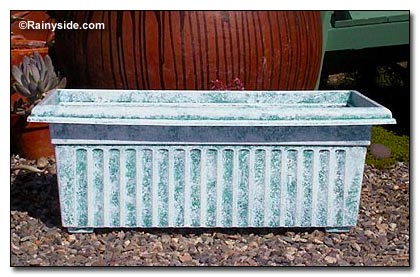
Faux painted plastic container
When I decided to have a window box, I wanted a container that would be lightweight. I went shopping for one that would fit the window width and look good. The lightest container I found was a cheap looking terra cotta plastic pot. No matter how much the manufacturers try to disguise them, they still look cut-rate and fake. The container I found was the right size and inexpensive, but the color was not going to work under the window. I decided to give it a verdigris faux finish. With a patina look-alike, the window box will be handsome until the plants grow and drape down to cover it.
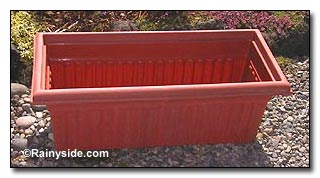
Select your plastic container
Here are the steps I used to achieve a faux finish on the container. This process will work for any style plastic pot. Choose colors that will go with your house or garden. This process takes very little time to paint; however, drying time for each coat of primer and paint will make this a two to three day process.
After you select your container, assemble all your tools and supplies.
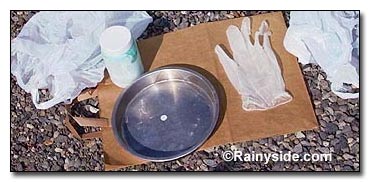
A few of the tools you will need.
Tool and Supply List
- plastic container of your choice
- 100 grit sand paper
- tack cloth or damp rag
- paint brush
- plastic bags
- pie tin (to hold paint)
- plastic grocery bags
- paper grocery bag
- protective gloves
- acrylic primer
- 2 quarts of exterior flat latex paint - 1 verdigris-green and 1 white*
- water
- drop cloth
*I mix my own colors, but if you are not sure about doing it yourself, find a medium dark green paint color that is on the blue side. Then choose the lightest green (almost white) on the same swatch for your lighter color. You can also take your dark green and mix a little with white paint to make a green-tinted white. If you are mixing your own paints, make sure they are the same brand of exterior flat latex, and mix them in a separate container, not in the paint can. You will not need much white paint, so if your tinted white is not what you want, mix another batch. Start with about a 1/2 cup of white and add your green a spoonful at a time until you get the tint you want. Thin the light colored paint down with water so its consistency is like milk. Make sure you mix enough paint to do the entire job, as it will be tough to mix up another batch and have it match the first one.
If you are uneasy about doing this yourself, start with a small inexpensive container and practice on it. You really can’t mess up. If it does not turn out the first time, you can repaint it. If some of the paint chips off in a few years, it adds to the look of patina. If you want, you can lightly sand small areas of the paint once it is dry, allowing the terra cotta color to show through in places.
Use a drop cloth to protect table surfaces from paint.
Prep and Prime
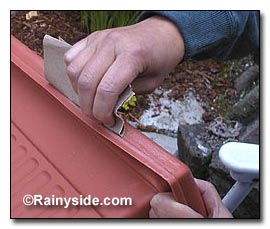
Sanding the container.
Using sandpaper, rough up the entire surface of the pot to be painted. When you finish sanding, wipe with a tack cloth or a damp rag to clean off the dust. If you use a damp cloth, be sure to allow the container to dry thoroughly before priming.
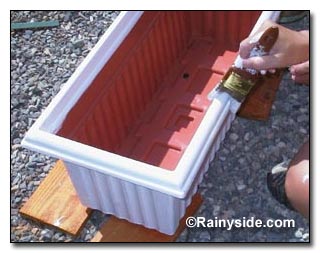
Priming the container.
The next step is to apply one coat of primer, thoroughly covering all areas of the container that will show. I let it dry overnight, but you can paint after the primer’s recommended drying time.
Now for the Fun Part - Paint and Faux Finish
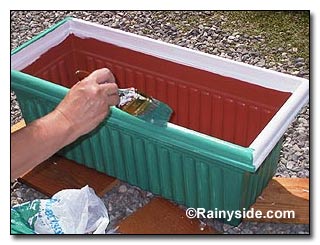
First coat of green paint.
The first coat of paint is the green. For a verdigris look, mix green paint to be on the blue side, but do not water this paint down. Using a paintbrush, paint one coat of green over the primer. It does not need to be perfectly painted; some brush strokes are fine, although you want to smooth out any paint drips. Let the container dry overnight.
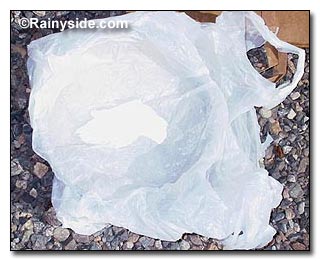
Pie tin inside a plastic bag and paint poured in.
Take a plastic bag and slip the pie tin inside of it. Pour the paint onto the plastic bag. When you’re finished painting, pull the bag off, turn inside out, with the leftover paint inside, and toss it away with no mess to clean up.
Mix the lighter green paint (almost white) with water to the consistency of milk. Pour a little bit of paint into your plastic covered tin or plate. Take another plastic bag and scrunch it up in your hand. Wear gloves to protect your hands from paint.
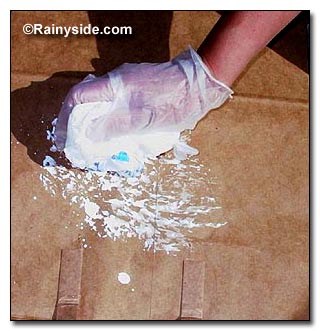
Blot the paint.
Dip the scrunched bag lightly into the paint. Then blot it on the paper bag until the plastic blots to the texture you see here on the paper. Use as many paper bags as you need for blotting. If the bag gets too wet from paint, use a new one. You can also pick up more paint from the brown paper that is saturated from blotting with paint. Each time you pick up more paint onto your bag, blot it out on the paper to get rid of excess.
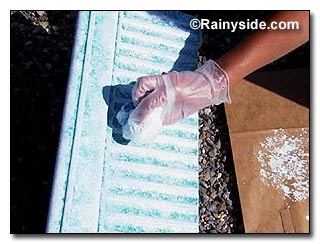
A light touch is necessary.
Lightly touch your container with the plastic bag, building up the greenish-white around the pot. Turn your hands each time you blot on the paint so the pattern does not look uniform. Keep working the bag all over the pot until you have much of the lighter color covering the green. If you have corners to get paint into, you can manipulate the plastic bag to fit the space.
If you get a little too much paint in an area, quickly blot excess paint off your plastic bag on the paper bag; then blot the excess paint on the pot to take it away.. You can’t mess this process up; the more random the touch of the bag on the pot, the better! Let the pot dry overnight.
Fill with soil and plants and you will have a beautiful container unlike any other. Enjoy!
Debbie Teashon
Gardening for the Homebrewer: Grow and Process Plants for Making Beer, Wine, Gruit, Cider, Perry, and More

By co-authors Wendy Tweton and Debbie Teashon (Rainy Side Gardeners)
Copyright Notice | Home | Search | Containers