

Tulips for the Spring Cutting Garden
After a long gray winter, I want to throw open the doors and windows in my home and feel the sunshine on my winter-weary body. I fancy a gentle and warm summer wind to waft through the house like the tropical breezes of Hawaii I remember from living there for many years. Since this is often not possible in the Pacific Northwest during a typical cloudy, gray, spring day, I need a diversion of color to brighten my mood. I walk out to where lively hues dance in the cutting garden. With shears in hand, I cut the vivid jewels and bring in a bouquet of tulips to brighten my home. Already the day is cheerier as I arrange my favorite flowers in a vase.
Between the daffodils and tulips, spring season is well represented with flowers for the cutting garden. At a time when perennials are just waking up and stretching their branches towards the sun, and the annuals are still too young to be thinking about the birds and the bees, the spring bulbs are in their prime.
Tulip varieties have been bred to bring an outstanding range of colors and a long season of bloom time. Careful selections can keep your cutting garden well stocked with tulips for most of spring, with early tulips flowering in March, mid-season ones in April, and late bloomers in May.
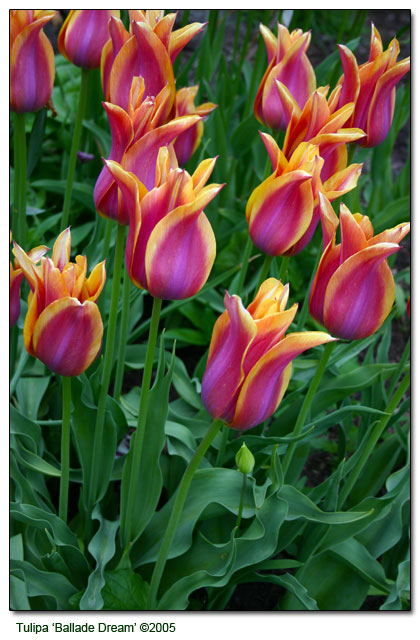
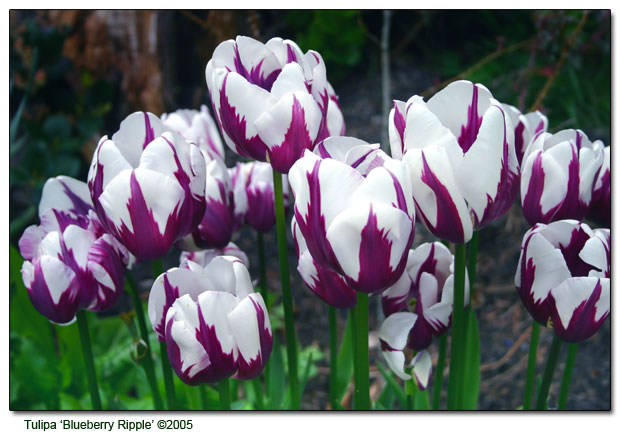
My favorite tulips are the lily-flowering varieties. They come back year after year and reliably bloom for me in May. Tulipa 'Ballade' with its purple flower petals and white margins and T. ‘Ballade Dream’ (top image) with its yellow margins are stunning tulips in both display and cutting gardens. The snow-white T. 'White Triumphator' is one I planted years ago. The following spring a commercial florist picked them from my garden for a bride's bouquet, since none were available in the floral cut market at that time. A bride went down the aisle with the white tulips she wished for in her bridal bouquet, fresh cut from my garden that morning.
Tulipa 'Burgundy' is an old standby in my garden and bloomed for years from one planting. T. 'William and Mary' is on my list to plant next fall. Their creamy yellow flower petals have a flush of pink that I think will be a nice addition for my cutting garden, as well as in the rest of my garden for display.
I don't rule out tulips that are a one-pony-show in the cutting garden. Many beautiful hybrid tulips are good for only one year. If I can purchase some of these bulbs inexpensively, even as mixed colors, I am not opposed to planting them and digging up the bulbs when they are finished blooming or the flowers have been cut. The perennial tulips that come back every year are usually found in species tulips, as well as the hybrid Darwins, Fosterianas and lily-flowering tulips. The main tulips used extensively in the cut flower trade include Fosteriana, Darwin, lily-flowering, Triumph, Parrot, Rembrandt, Double and Peony tulips.
When purchasing your spring flowers, choose good size bulbs that are plump and show no signs of mold. Small bulbs most likely will not flower. Beware of bargains where the price seems too good to be true. Chances are you will buy 50 bulbs and end up with only three that flower. This is no bargain! If you are on a budget, buy at least 10 good quality bulbs of a variety that will be perennial in your cutting garden. The following year, add another variety in a quantity that you can afford. Slowly building your cutting garden each year is one way to make it affordable. It won't take long. Soon you will have a garden full of tulips to keep your home filled with flowers in spring.
Plant your bulbs in fall; October to November is an optimum time for planting in our maritime climate. Plant your bulbs six inches deep and six inches apart, throwing a small handful of bone meal in the planting hole. If you have problems with squirrels digging up your bulbs, cover the planted area with small-gage chicken wire laid right on the ground.
For tulips that will grace your cutting garden for many years (up to five years before they need to be lifted), fertilize in spring and fall. If you don't cut the flower, be sure to deadhead the spent blossom. This keeps the plant from putting energy into seed production. Allow the foliage to go completely yellow before removing the dried up remains.
Harvest tulips when the entire flower is colored but not opened. Darwin tulips are the exception; harvest them when 50% of the flower is colored. In the first 24 hours after harvest, the stems continue to grow and the flowers reach towards the light. If you want to place tulips and daffodils together in a vase, do so only after the daffodils have stood in water by themselves for at least 24 hours. Daffodils ooze a mucous type substance that is toxic to many other flowers.
Consider adding tulips to your cutting garden this fall. When springtime rolls around and you are cutting bright colored tulips from your garden, you will be so thankful you grew them specifically to add to your vases. For you romantic types, giving a bouquet of tulips to someone is a declaration of love. For whatever reason you grow them, a vase full of colorful tulips is a cheery way to greet our long, gray spring days!
by Debbie Teashon
You might like the article Cutting Garden

Gardening for the Homebrewer: Grow and Process Plants for Making Beer, Wine, Gruit, Cider, Perry, and More

By co-authors Debbie Teashon (Rainy Side Gardeners) and Wendy Tweton
Copyright Notice | Home | Search | Archives